AshX There is no doubt OLED is superior for smartphones. It's not some kind of evil conspiracy. Pick up a Moto Edge and see for yourself. The feel of the screen is something I've never felt with LCD. It's so much nicer, not to mention the picture quality is fantastic. I can't blame the companies for being crazy about pOLED. It's an incredibly good technology although it does have imperfections. Motorola does it right with DC dimming. Therefore, at higher brightness levels with flicker-prevention enabled, we get only a refresh dip of maybe 17%. This is much higher than the modulation of an LCD like the Moto G 2025, but still should be very tolerable when used in a well lit environment. As well, to improve the comfort of OLED, you need a higher refresh rate since there is a dip in the current and brightness every time the screen refreshes. You want that dip to be at 120 Hz, not at 60 Hz. We know this from the CRT days when 60 Hz was annoying if not painful. I used 100 Hz in those days. 120 Hz should be fine with a refresh dip of under 20%.
Speaking of using a higher refresh rate with OLED, that's not common knowledge from what I've encountered. The PWM community judges screens based on slow motion video cameras. They don't properly step back and think about the data they are analyzing.
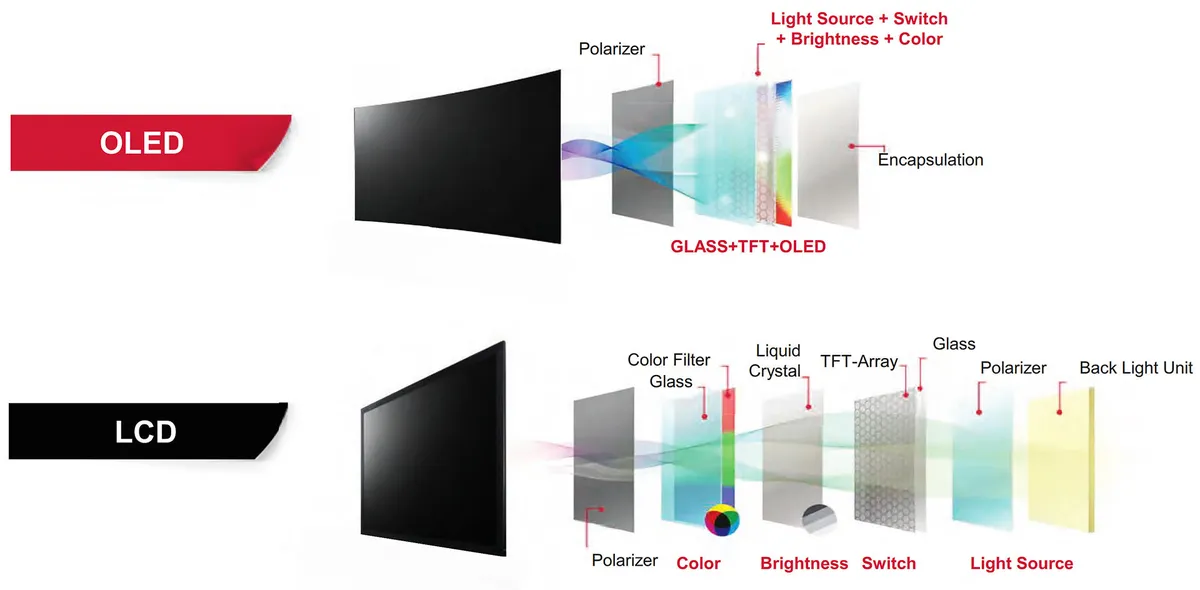
Try a Moto Edge 2025 or 2024 in a well lit environment or outdoors. Put the refresh at 120 Hz. Turn on flicker prevention. I will be astounded if under those conditions the screens cause any unusual strain or headaches. There is no rational reason for properly implemented pOLED to be unusually straining when used in well-lit environments. Remember, there's no dedicated backlight, and contrast is very high, so you need to account for that somehow if you are to have a comfortable experience.
Those finding uncomfortable Motorola pOLED with flicker prevention and 120 Hz of refresh likely are using the screens in a way where they are bound to be uncomfortable, not as I suggest in the wild in well-lit environments.
Of course they are uncomfortable in dark rooms. Just means you need more ambient lighting in this case. pOLED excels in daylight and bright environments.
Saying that, I was using my friend's iPhone 14 Pro Max tonight, and I don't believe their OLED at least in that model is properly implemented like Motorola's. Nick at Android Central agrees with me in that he says Motorola's flicker-prevention allows him to comfortably use OLED. He also says he is not sensitive to dither, so he can use comfortably the 2025 Moto Edge that does have significant dithering.
I'm not convinced dithering is a major source of strain because there is some kind of dithering in the natural fabric of this reality. When you go outside the light is extremely dynamic. There is nothing particularly unnatural about dithering, but there is in science well-known placebo and nocebo effects.
"Placebo and nocebo effects refer to the power of the mind to influence physical responses, either positively or negatively."
I have read of these effects being very significant, showcasing the power of the mind and our beliefs in our experiences. A popular book on this topic is by Bruce Lipkin: "The Biology of Belief."
Bottom line, use your devices in properly lit environments. With OLED this is even more important because there is no backlight. This is just basic logic. If you have an OLED monitor indoors, proper lighting truly is crucial. Of course some people aren't sensitive to anything, but why push your luck?
Importantly, OLED screens must not be run on 60 Hz like LCD. Those telling you to use 60 Hz with OLED aren't thinking logically and rationally. Put the refresh to 120 Hz and use the OLED in a bright environment, and come to back to me with your results.