Z3R0Gravitas Haha, that's true! Although this is a complicated issue with often a lot of nuance!
I tried the FL-41 glasses on-site at work yesterday on a Dell P2425E with the standard profile, and its default brightness/contrast settings of 75% brightness, 75% contrast. Arg, I still feel the eyeball pinch behind the rose-colored glasses. I feel it doesn't block enough blue or something. 75% brightness is quite a lot, but there are also a lot of windows and natural light coming in as well during the day.
There's another odd phenomena I experience besides the eyeball pinch when looking at bright light emitted from LED monitors. My brain feels overwhelmed somehow, as if it's being too stimulated. I seem to take longer to process each word I'm reading, or I have to reread each sentence multiple times. There is this mild neurological "queasiness" I get, and it's a bit hard to describe.
So far, my best luck has been a very aggressive blue-blocking tint, such as orange, which blocks 100% of blue light. So why not use that and be on my way? I'd still like to be able to see the color blue! Blue is black under the lenses, and white is yellow. That means if I highlight something in an email or a Word document, it is completely camouflaged, lol.
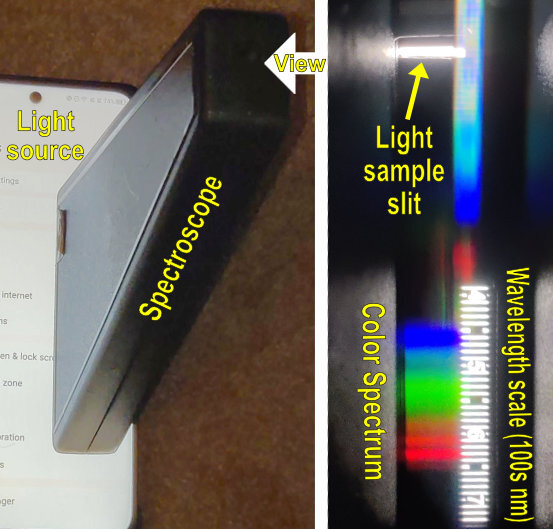
It still doesn't explain why I can see blue fine on my CCFL LCDs without pain (albeit at 0% brightness!) That's why the spectrometer would be so useful, as I believe the fluorescent color spectrum isn't too high in the blue area - the one that seems to cause me pain.
Also when it comes to color spectrums, I feel that such information should be widely available? Surely there is some monitor spec website that includes such a chart for all monitors?
For anyone still trying to find out the root cause of your issues, I suggest seeing what happens underneath a pair of orange SCT glasses. I have to wear contacts underneath these wraps in order to keep my prescription. If you don't have contacts and wear glasses, you can also use something like Goiteia Blue Light Blocking Glasses Clip on.
These are cheap options just to use for the "troubleshooting" process to see if cutting out the blue light spectrum completely makes your brain feel better. It is by no means a solution, as not being able to see certain colors is quite a detriment.